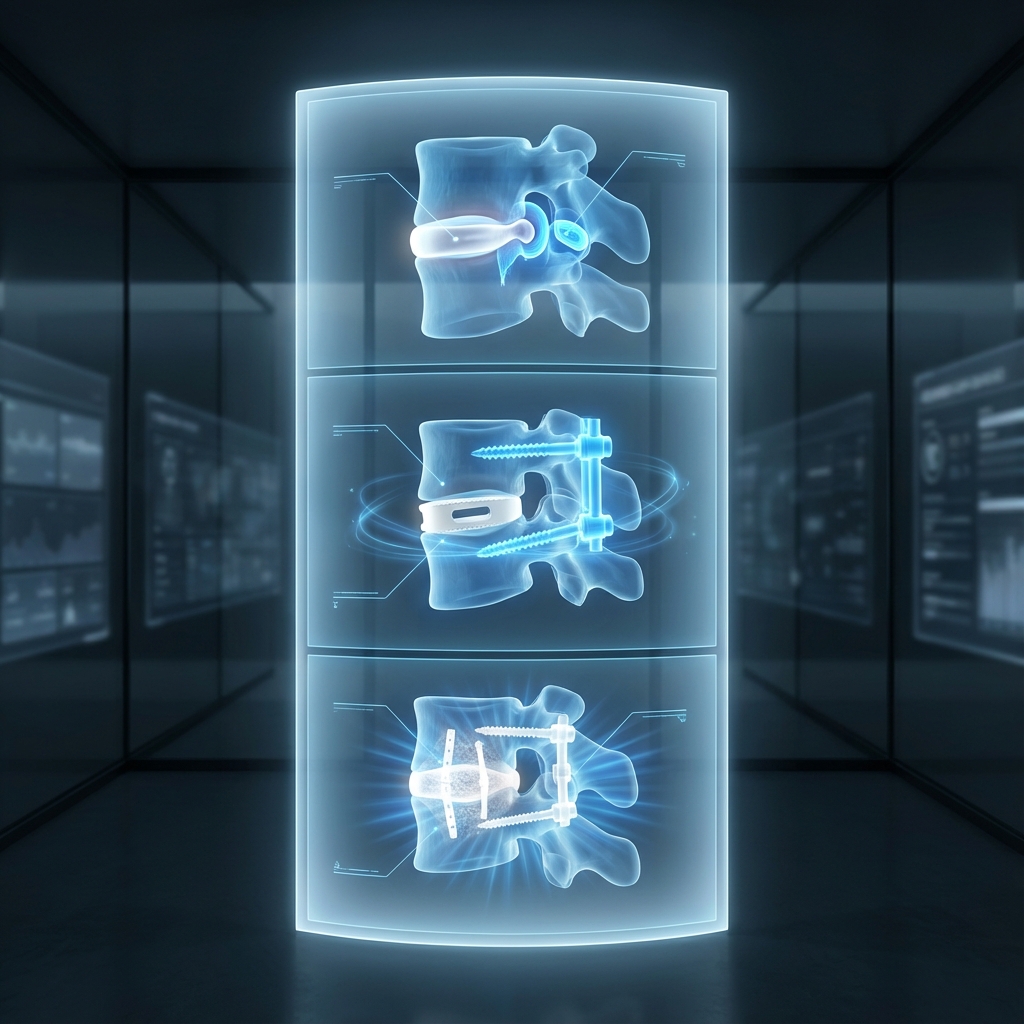
Multi-Level Disease
Comprehensive management of degenerative changes affecting multiple discs in the spine. When spinal pathology extends beyond a single level, advanced arthroplasty techniques offer solutions that preserve motion across multiple segments whilst addressing complex anatomical challenges.
Levels Treatable
Advanced Arthroplasty
2–4
Motion-preserving disc replacement can address degenerative changes across multiple contiguous spinal levels.
Patient Satisfaction
Clinical Outcomes
85%+
High satisfaction rates in multilevel arthroplasty patients with preserved spinal mobility.
ASD Risk Reduction
Long-Term Protection
50%
Significant reduction in adjacent-segment disease compared to multilevel fusion approaches.
Prevalence and Natural HistoryA Complex Clinical Challenge
Multilevel degenerative disc disease is extraordinarily common. Imaging studies demonstrate that degenerative changes are often widespread throughout the spine, yet the relationship between imaging findings and clinical symptoms is inconsistent.
Radiographic Prevalence
Clinical Symptomatic Disease
Critical Distinction
The presence of radiographic degeneration at multiple levels does not automatically indicate that all affected levels require surgical treatment. Determining which levels are actually causing symptoms (the "pain generators") requires careful clinical evaluation, correlation with imaging, and often diagnostic procedures.
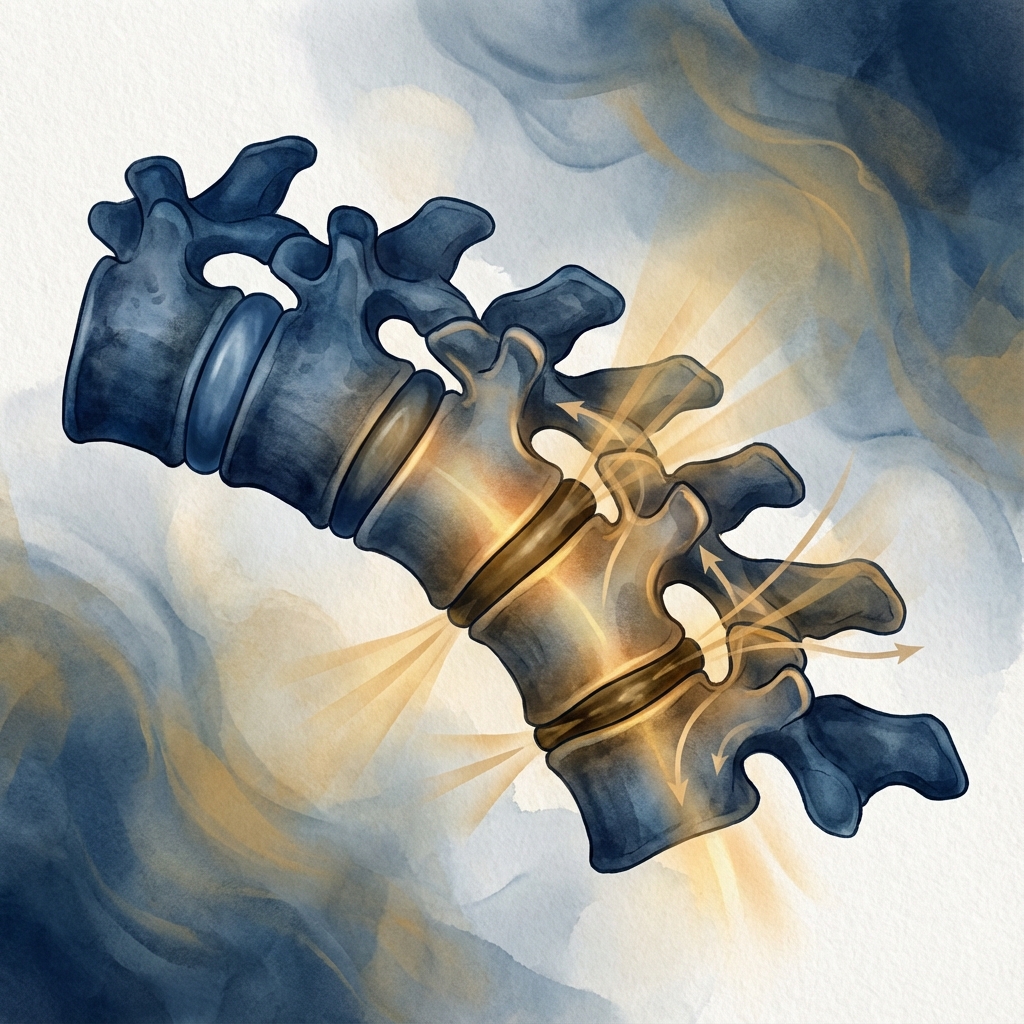
Degeneration at one level can accelerate changes at adjacent segments through altered biomechanics.
Why Multilevel Disease Develops
The development of multilevel degenerative disease reflects both the natural ageing process and acquired biomechanical changes that propagate degeneration across spinal segments.
Symptom PatternsComplex and Variable Presentations
Patients with multilevel degenerative disease present with diverse symptom patterns depending on which levels are primarily responsible for symptoms.
Upper Cervical Dominance (C3–C4, C4–C5)
Neck pain predominant, upper arm involvement
Lower Cervical Dominance (C5–C6, C6–C7)
Arm pain and neurological symptoms (weakness, numbness) predominant
Global Cervical Involvement
Neck and arm pain together; myelopathy (spinal cord compression) symptoms including balance difficulties, lower extremity symptoms, hand clumsiness
Non-contiguous Disease
Symptoms from non-adjacent levels (C3–C4 and C6–C7 symptomatic, C5–C6 asymptomatic)—presents diagnostic and surgical planning challenges
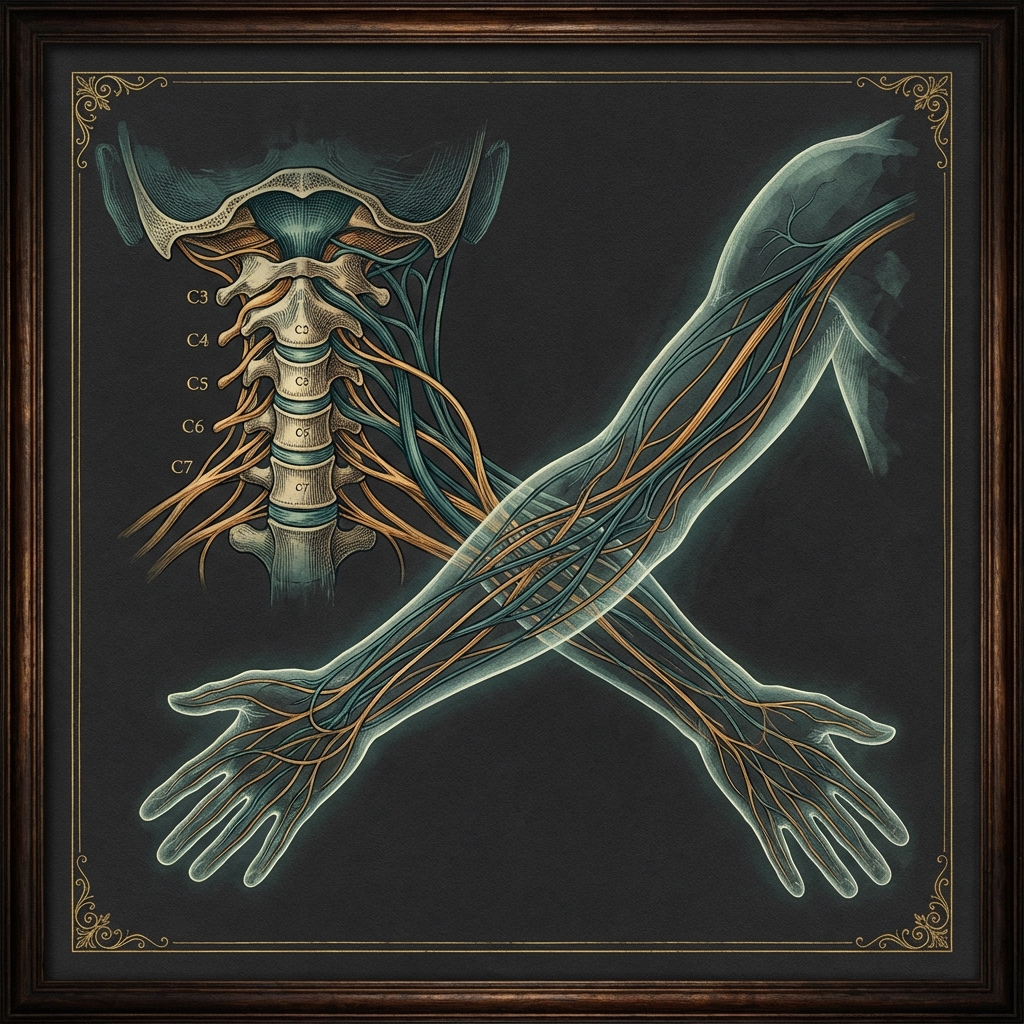
Cervical nerve root distributions affect upper extremity function
Diagnostic Challenges in Multilevel Disease
Determining which levels are actually causing symptoms represents a fundamental clinical challenge:
Treatment Strategy SelectionSingle-Level vs Multilevel
A fundamental decision is whether to treat only the most symptomatic level or address multiple levels simultaneously. For multilevel disease requiring treatment, the surgeon must decide: Should all levels be treated identically, or should different approaches be used at different levels?
Single-Level vs Multilevel Treatment
Clinical Guidance
Current evidence supports treating all symptomatic levels simultaneously when feasible, as this provides comprehensive symptom relief and reduces reoperation risk compared to staged single-level procedures. However, treating asymptomatic degenerative levels should generally be avoided.
Determining Optimal Multilevel Treatment Strategy
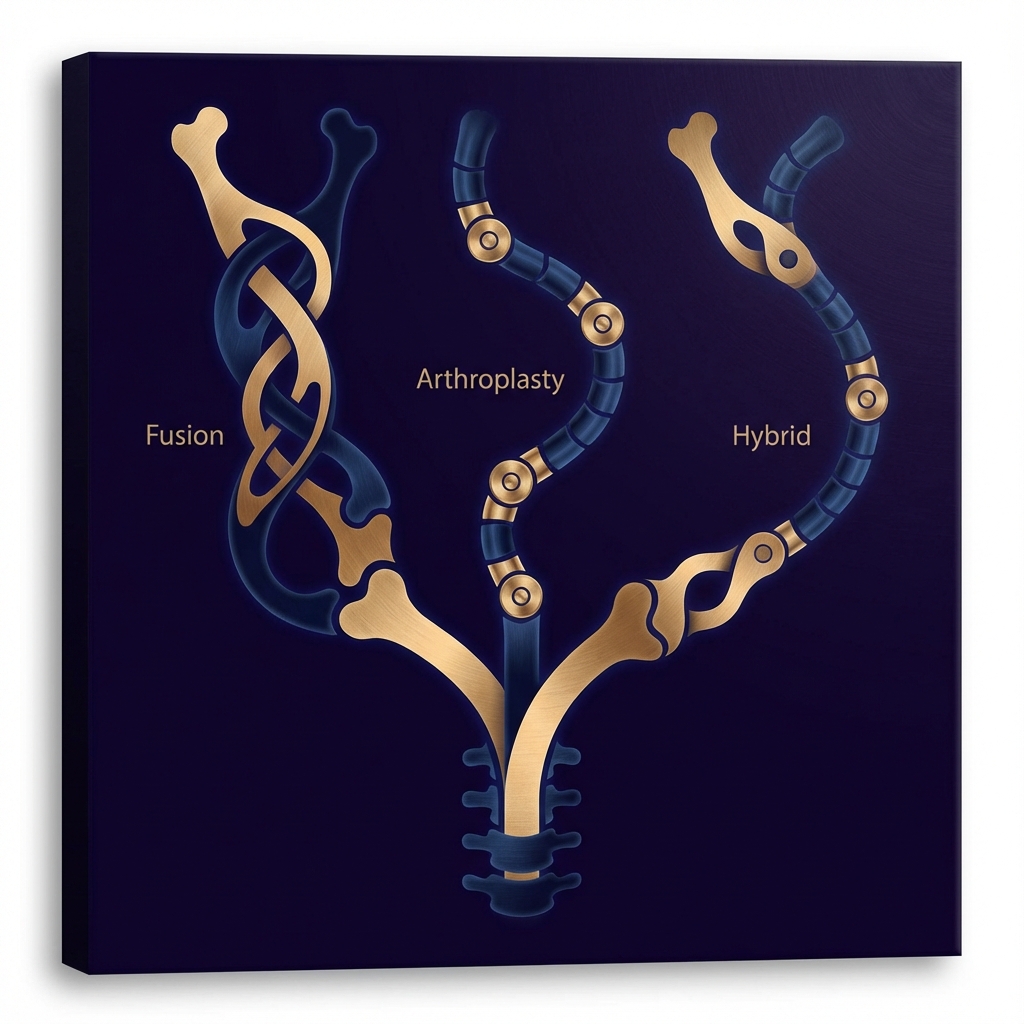
For multilevel disease requiring treatment, the surgeon must decide: Should all levels be treated identically (all fusion, all arthroplasty), or should different approaches be used at different levels (hybrid strategy)?
Multilevel Fusion Approach
All affected levels are fused with bone graft and internal fixation.
Key: Provides immediate stability and comprehensive decompression throughout the involved levels.
Multilevel Arthroplasty Approach
Disc replacement is performed at all affected levels, preserving motion at each level.
Key: Requires that all treated levels be suitable for arthroplasty (good bone quality, preserved disc height, minimal facet disease).
Hybrid Approach
Selected levels are treated with arthroplasty (where suitable for motion preservation), whilst other levels are fused (where arthroplasty is contraindicated).
Key: Balances motion preservation with stability where necessary.
Multilevel Cervical Disc ArthroplastyEvidence-Based Results
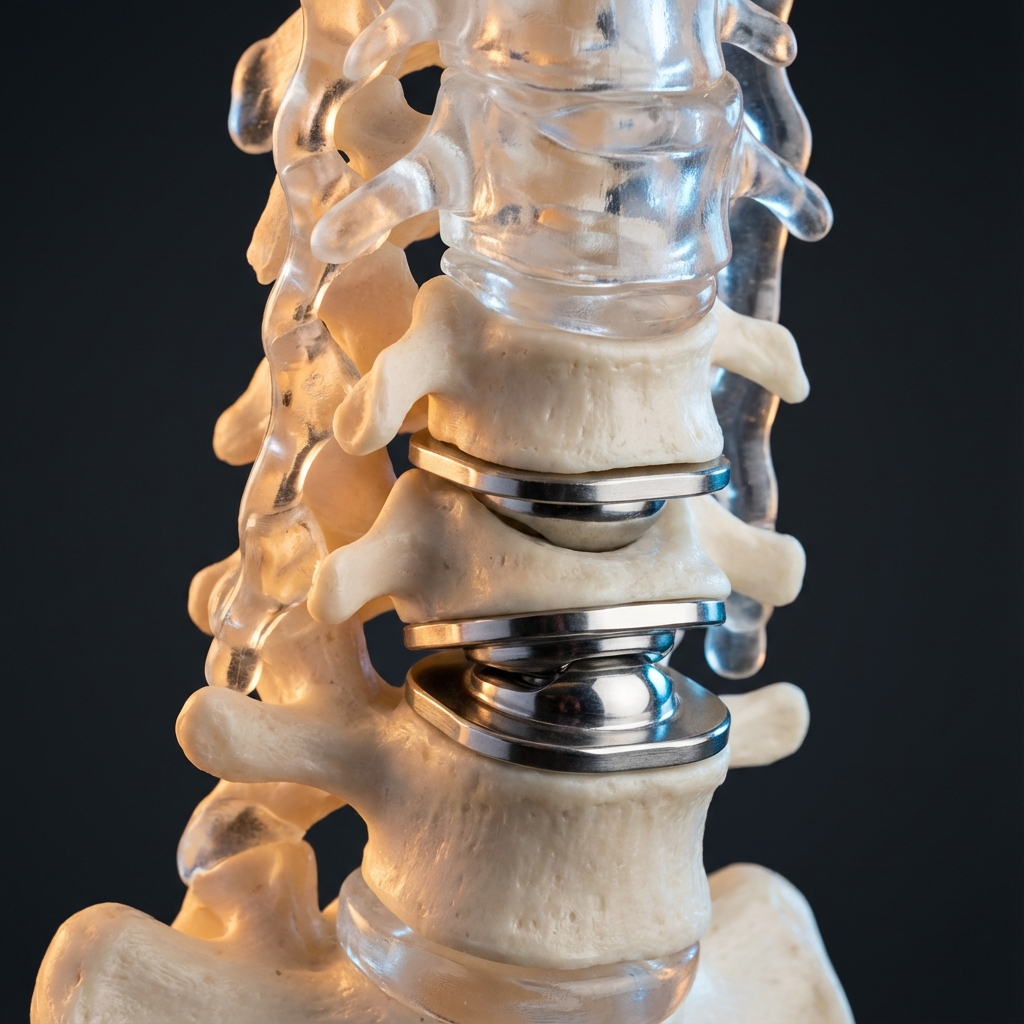
Multilevel cervical disc arthroplasty has substantial evidence supporting its safety and efficacy. Recent meta-analyses and long-term studies demonstrate clinical superiority over fusion approaches.
10-Year Meta-Analysis
A comprehensive systematic review examining randomised controlled trials and comparative cohort studies found:
Key Finding
Two-level cervical disc arthroplasty demonstrates clinical superiority over two-level ACDF at extended follow-up, particularly regarding motion preservation and adjacent-segment disease protection.
Heterotopic ossification (bone formation around implants) is more common with multilevel cervical arthroplasty than single-level:
Most patients remain asymptomatic
Clinical impact minimal in most cases
ROM preservation maintained despite HO
Clinical Significance: Heterotopic ossification does not appear to be a barrier to successful multilevel cervical arthroplasty in appropriately selected patients, particularly with third-generation implant designs.
Multilevel Lumbar Disc ArthroplastyLong-Term Stability
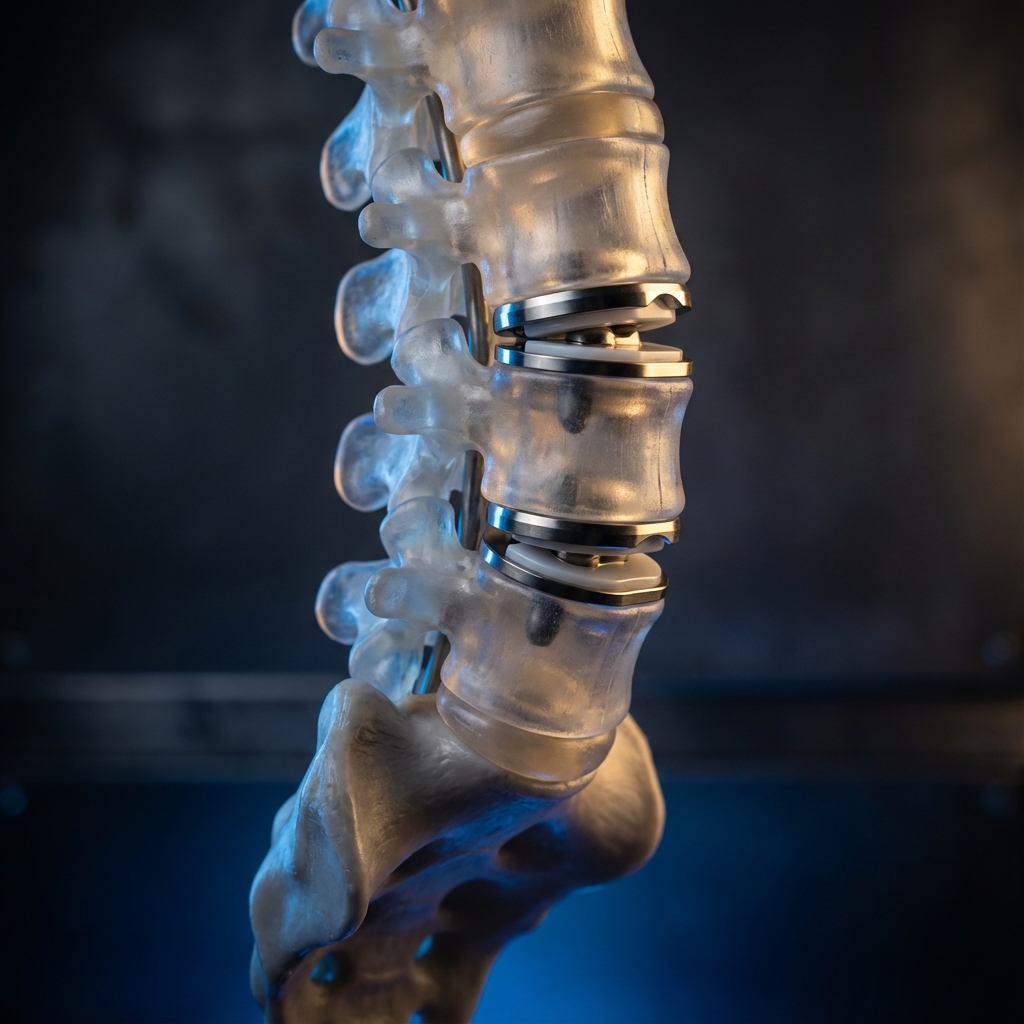
Two-level lumbar total disc replacement has demonstrated excellent long-term outcomes with sustained, dramatic improvement in pain and function over 5–10 years.
7.8-Year Prospective Study
131 patients with symptomatic multilevel lumbar degenerative disc disease (98.4% two-level, 1.6% three-level):
88.8% improvement (from 54.6)
95.2% improvement (from 54.5)
77% improvement (from 48)
Good or excellent at final review
122/131 required no revision
Predominantly for SI dysfunction, not implant failure
Levels Treated: L4–L5 and L5–S1: 90.2% of cases (most common) | L3–L4 and L4–L5: 8.2%
Comparison with Two-Level Lumbar Fusion
Key Finding
Two-level lumbar disc arthroplasty in appropriately selected patients demonstrates sustained, dramatic improvement in pain and function over 5–10 years, with low reoperation rates and high patient satisfaction. It achieves superior pain and disability improvement compared to fusion, with substantially lower adjacent-segment disease risk.
Regulatory ConsiderationsAustralian Healthcare Context
The Australian regulatory framework for multilevel spinal arthroplasty is far behind the evolving evidence and understanding of these complex procedures.
Current Medicare Framework
Single-level Coverage
MBS Items 51130 and 51131 with strict eligibility criteria
Multilevel Limitations
Alternative funding strategies required for appropriate candidates
Clinical Evidence Requirements
Expanded coverage supported through documented outcomes
International Precedent
FDA approval for two-level procedures in the United States
Clinical Practice Implications
Hybrid Procedure Alternatives
Combining disc replacement with selective fusion
Private Funding Options
Available for appropriate multilevel candidates
Evidence Generation
Comprehensive outcome documentation for advocacy
Advocacy for Expanded Coverage
Based on accumulating clinical evidence
What This Means for Patients
Whilst regulatory frameworks continue to evolve, patients requiring multilevel treatment should discuss all available options with their surgeon, including hybrid approaches, private funding pathways, and the latest evidence supporting motion-preserving solutions for complex spinal pathology.
Hybrid Procedures for Multilevel DiseaseBest of Both Worlds
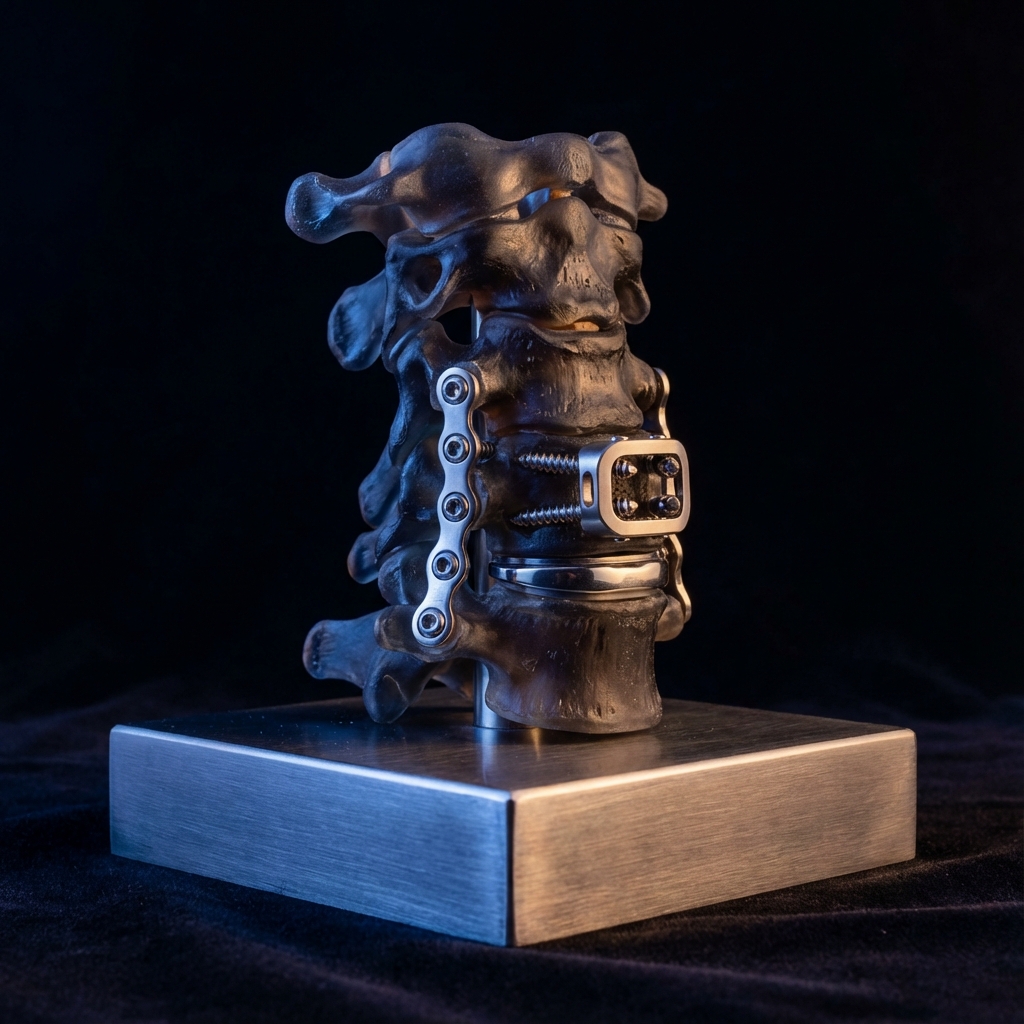
Hybrid procedures—combining arthroplasty at some levels with fusion at others—represent a sophisticated strategy for complex multilevel disease where not all levels are equally suitable for motion preservation.
Clinical Scenario
A patient with three-level cervical degenerative disease might have:
Excellent-quality discs suitable for arthroplasty
Severe facet joint arthropathy—contraindication to arthroplasty, better suited for fusion
Hybrid approach: Arthroplasty at C4–C5 and C5–C6, fusion at C6–C7
Cervical Hybrid Outcomes
2020 prospective study of 151 patients undergoing hybrid cervical procedures (mean 12-month follow-up):
Biomechanical finite element analyses and clinical motion studies demonstrate superior properties:
Key Finding
Cervical hybrid procedures achieve statistically and clinically meaningful improvements in outcomes with acceptable complication rates, validating the approach for appropriately selected multilevel disease.
Multilevel Fusion ApproachesWhen Fusion is Necessary
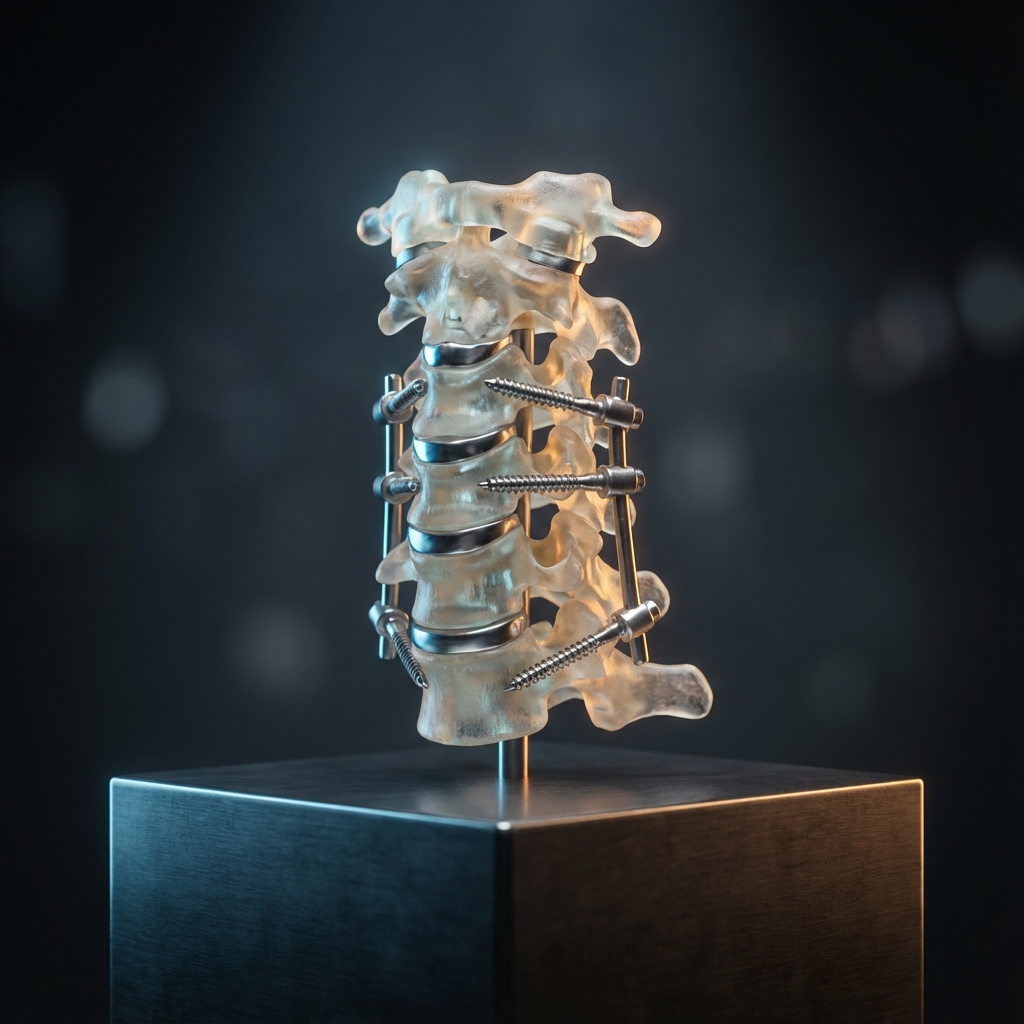
Multilevel fusion remains the appropriate treatment for patients with contraindications to arthroplasty.
Indications for Multilevel Fusion
Single-Stage Multilevel Fusion
All affected levels addressed in one operative procedure. Most common approach for 2–3 level disease.
Staged Procedures
Treatment of different levels at separate operations.
Instrumentation Considerations
Rigid Instrumentation (Pedicle Screws)
Provides immediate stability. Standard approach for most multilevel fusion.
Associated with well-documented adjacent-segment disease risk.
Minimally Invasive Instrumentation
Less muscle disruption with potentially reduced adjacent-segment disease risk.
Comparable fusion rates to traditional approaches.
Motion-Sparing Approaches in Fusion Context
Semi-rigid dynamic systems attempt to reduce adjacent-segment disease risk whilst providing stability.
Limited but emerging evidence supports their role in selected cases.
Biomechanics in Multilevel DiseaseUnderstanding Load Distribution
The fundamental biomechanical challenge in multilevel disease involves understanding how treating multiple levels affects load distribution throughout the spinal column.
Rigid Fusion
All load concentrates at fusion interfaces
Up to 115% increase in shear forces at adjacent levels
Motion-Preserving
Maintains motion and distributes load more naturally
30–50% reduction in ASD risk vs fusion
Hybrid Mechanics
Balances stability with motion preservation
Less compensatory stress than all-fusion constructs
Sagittal Alignment and Multilevel Constructs
Proper sagittal alignment becomes increasingly important in multilevel disease, as malalignment propagates abnormal loading throughout the construct and beyond.
Clinical Impact
Patients with multilevel disease who undergo treatment that fails to restore appropriate sagittal alignment show higher adjacent-segment disease rates and worse long-term outcomes.
Careful attention to alignment during surgical planning is essential for optimising biomechanical outcomes.
Patient Selection for Different ApproachesMatching Treatment to Patient
Careful patient selection is crucial for optimal outcomes. Understanding who makes an ideal candidate for each approach ensures the right surgical decision.
Ideal Candidates for Multilevel Arthroplasty
Essential characteristics for optimal outcomes:
Selection is Critical
Multilevel arthroplasty maximises motion preservation but requires that all treated levels meet the candidacy criteria. Age alone is not a contraindication—older patients can be successfully treated when bone quality and other factors are favourable.
Quick Reference: Contraindications
Special Considerations in Multilevel DiseaseComplex Clinical Scenarios
Certain presentations require special consideration due to their complexity and the unique challenges they present for surgical planning.
Noncontiguous Multilevel Disease
Some patients have symptomatic disease at non-adjacent levels (e.g., C3–C4 and C6–C7 symptomatic, C5–C6 asymptomatic). This presents diagnostic and surgical challenges:
Current Evidence: Most data support treating all symptomatic levels whilst avoiding prophylactic treatment of asymptomatic degeneration. Contemporary approaches increasingly address all symptomatic levels simultaneously for comprehensive symptom relief.
Revision of Previously Treated Patients
Patients with prior fusion who develop symptomatic adjacent-segment disease present complex revision scenarios:
Clinical Significance: Prior fusion does not preclude successful arthroplasty at adjacent levels for revision, supporting hybrid constructs as viable revision options.
Decision-Making Framework for Multilevel DiseaseStep-by-Step Approach
A systematic approach to selecting treatment strategy ensures optimal outcomes for patients with multilevel degenerative disease.
Comparative Outcomes and Long-Term ResultsEvidence-Based Comparison
Comprehensive meta-analyses and long-term studies provide clear evidence comparing multilevel arthroplasty with multilevel fusion approaches.
10-Year Cervical Outcome Meta-Analysis
Multilevel Arthroplasty vs Multilevel Fusion
7+ Year Lumbar Outcome Data
Multilevel Arthroplasty vs Multilevel Fusion
Key Finding
Multilevel arthroplasty demonstrates superior pain relief, disability improvement, motion preservation, and lower adjacent-segment disease risk compared to multilevel fusion at extended follow-up. These advantages become increasingly significant over longer follow-up periods.
Managing Multilevel Disease OptimallyEvidence-Guided Principles
Management of multilevel degenerative spinal disease requires sophisticated understanding of anatomy, biomechanics, surgical options, and long-term consequences of different approaches.
Key Principles for Optimal Outcome
Accurate Diagnosis
Distinguish symptomatic from asymptomatic degeneration. Treat all symptomatic levels whilst avoiding unnecessary treatment of asymptomatic disease.
Individual Level Assessment
Evaluate each affected level independently for candidacy for motion preservation (arthroplasty) versus stability (fusion).
Biomechanical Awareness
Understand how proposed treatment affects load distribution and long-term spinal health. Preserve motion where possible to reduce adjacent-segment disease risk.
Strategic Approach Selection
Choose from all-arthroplasty, all-fusion, or hybrid approaches based on individual patient anatomy and candidacy.
Surgeon Expertise
Ensure the surgeon has substantial experience with the chosen approach and is skilled at patient selection.
Patient Engagement
Ensure patients understand their specific anatomy, recommended approach, realistic expectations, and long-term implications.
Quick Reference: Multilevel Disease at a Glance
Multilevel Arthroplasty Outcomes
Multilevel Fusion Concerns (10–15 year)
Arthroplasty Candidate Criteria
Remember
Multilevel degenerative spinal disease represents a complex clinical challenge requiring individualised assessment of each affected segment and strategic selection of surgical approach balancing immediate symptom relief with long-term spinal health.
Evidence increasingly supports multilevel motion-preserving approaches for appropriately selected patients, offering superior long-term outcomes compared to traditional all-fusion approaches.
Careful patient selection, accurate diagnosis of symptomatic levels, and individualised surgical planning—incorporating principles of biomechanics, motion preservation where possible, and respect for the spine's intricate engineering—optimises outcomes and protects long-term spinal health in this complex patient population.